9/47 Architects
Transforming the steep topography of Kolej into a design driver, this proposal creates a dynamic interplay of visibility and enclosure through a series of interconnected, light filled housing blocks.
Client: TEDU BArch Studio Work
Category: Architecture, Brand Identity
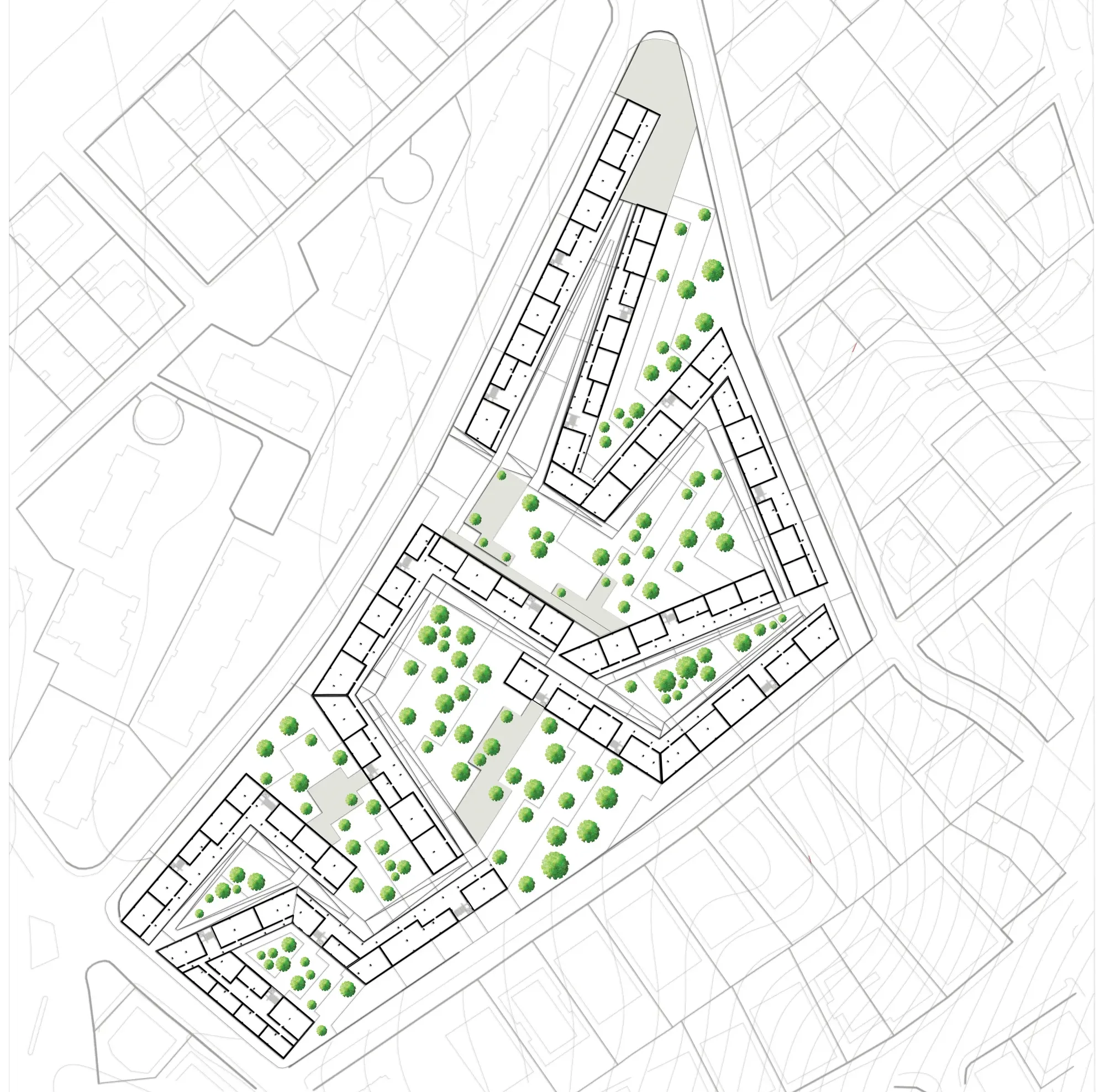
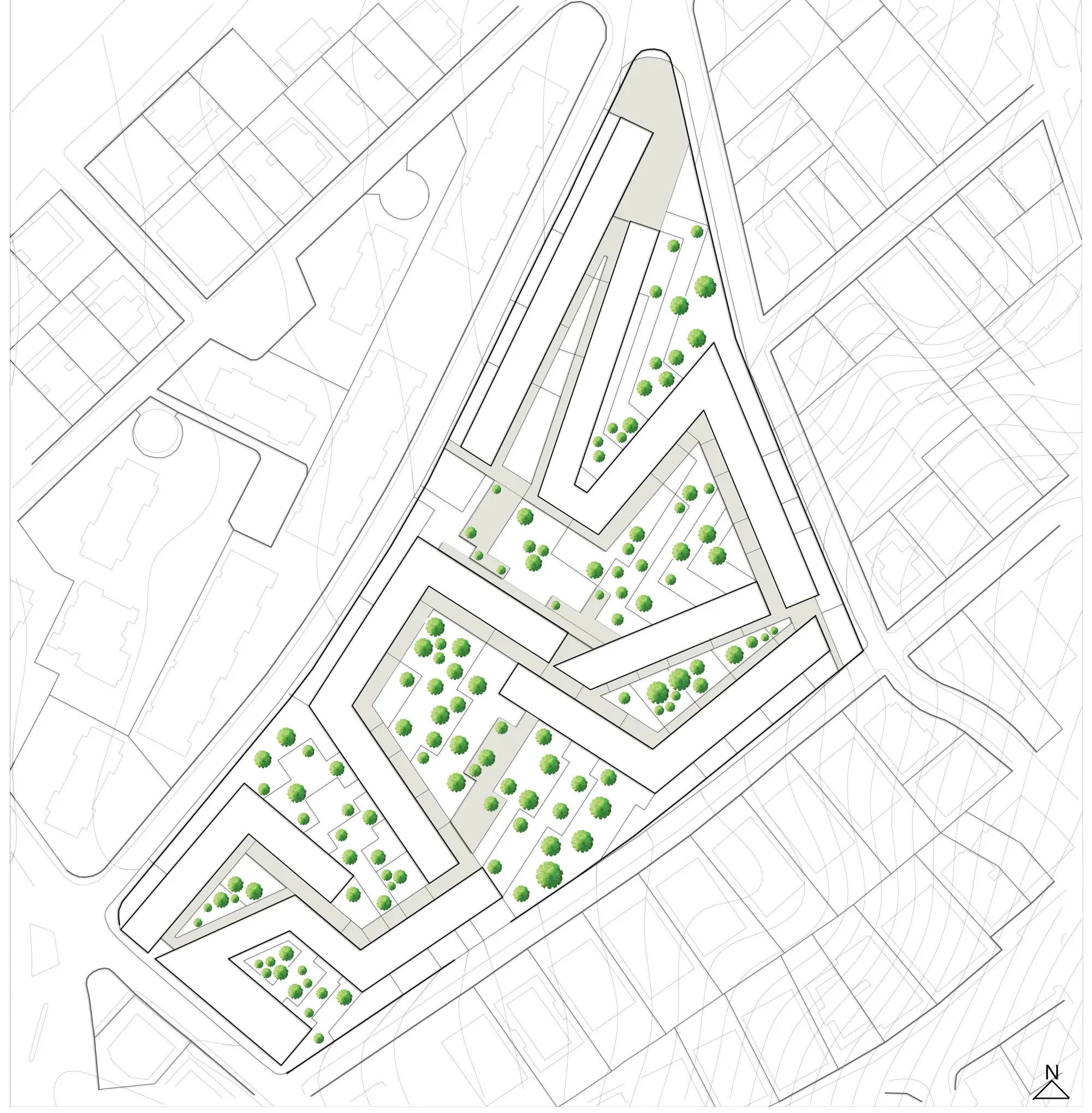
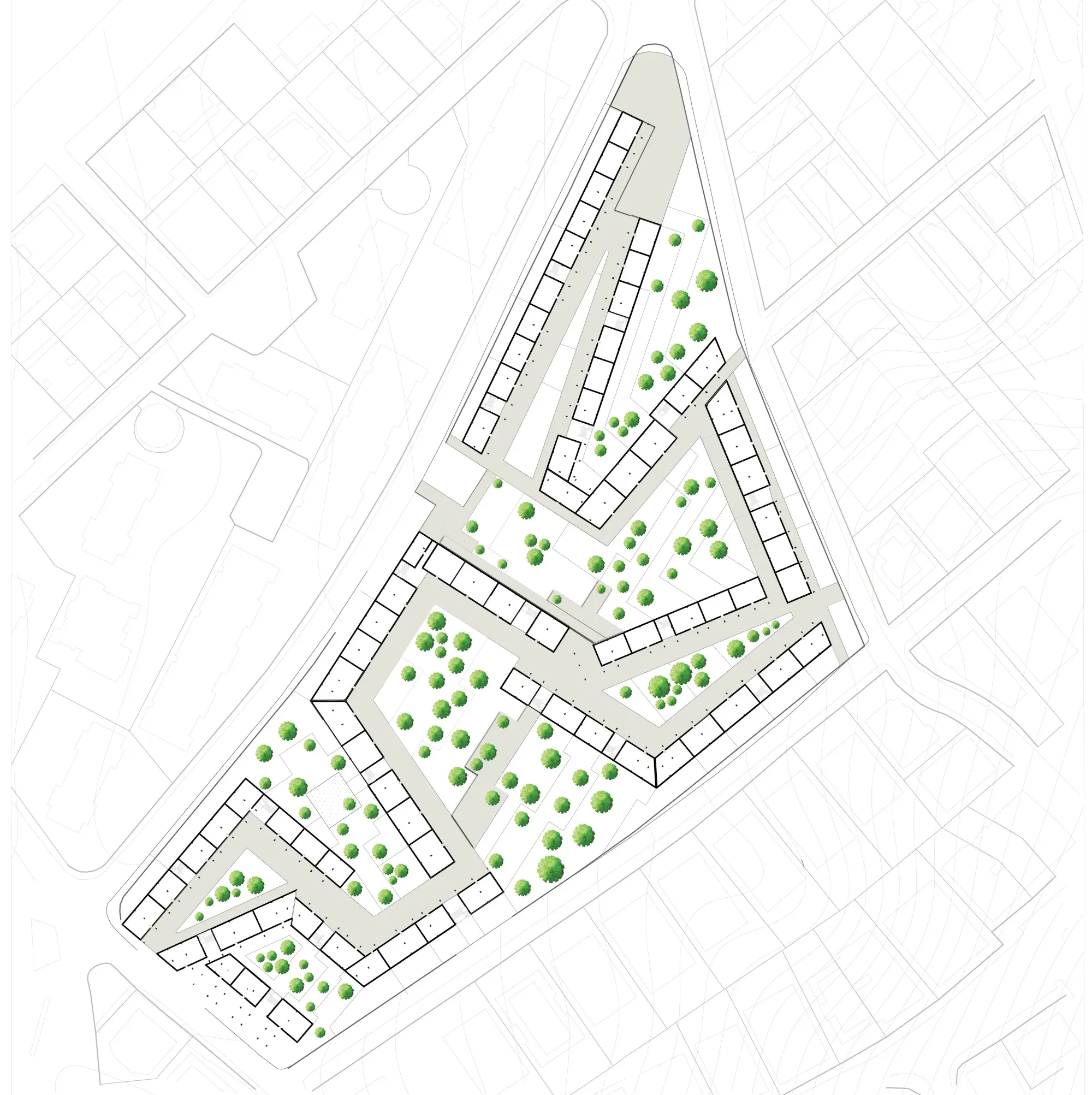
This project explores a social housing proposal in the dense urban fabric of Kolej, Ankara. The design challenges conventional notions of the street by deconstructing it into a continuous spatial ribbon, a sequence of interconnected housing blocks that weave through the site.
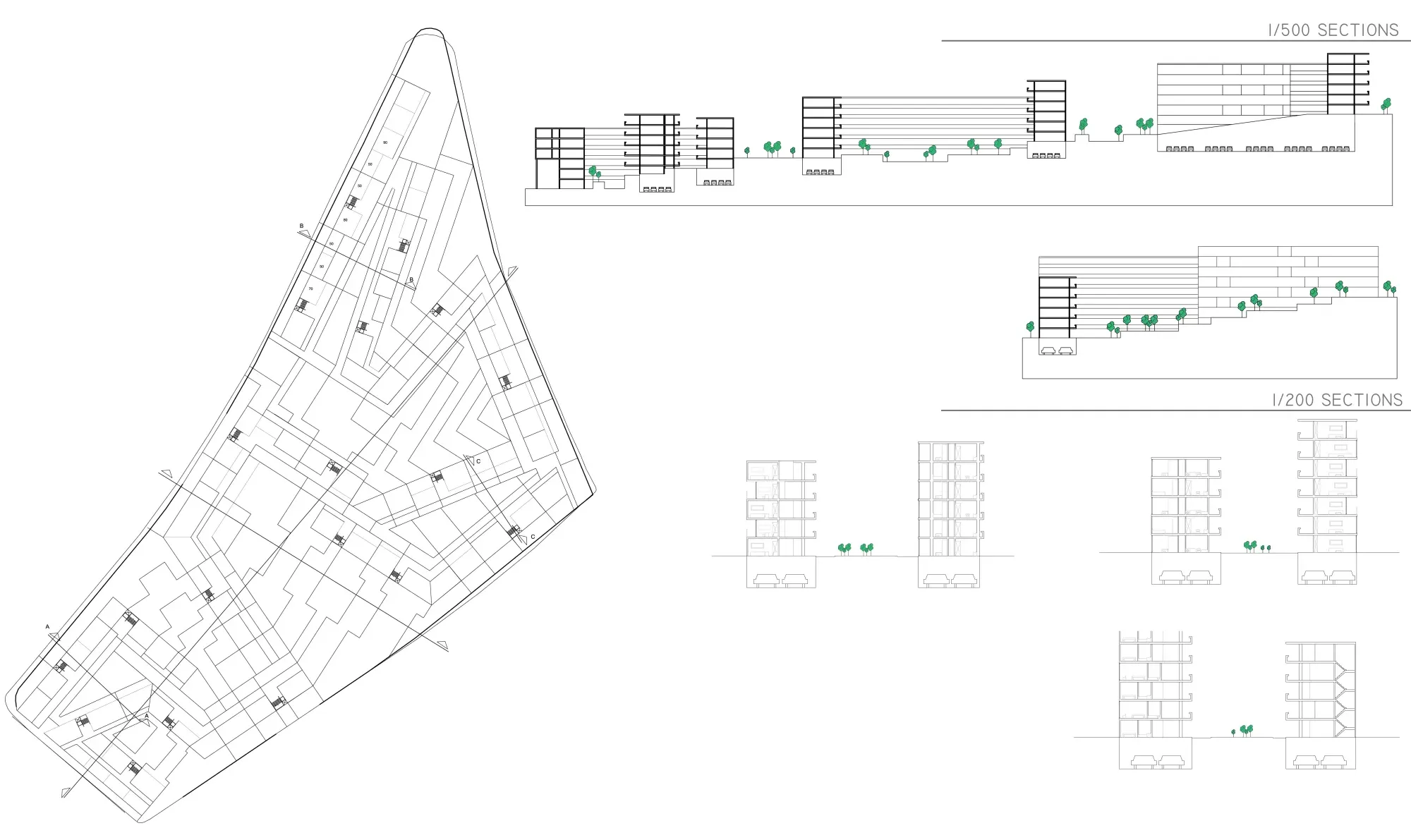
Strategic slits and openings within this ribbon introduce moments of translucency and exchange between the public realm and private living spaces, creating a dynamic interplay of visibility and enclosure. The steep topography, rather than being treated as a constraint, becomes an integral design driver, shaping circulation, access, and spatial hierarchy throughout the site.
The result became a cohesive architectural system that transforms density into a landscape of connection and rooted community in both context and form.
In every project at 9/47 Architects, we prioritise a "research-first" approach. This involves:
Mapping Invisible Layers: Analysing the historical, social, and environmental data of a site before the first sketch is made.
Structural Translucency: Exploring how materials and light can create spaces that feel open and connected, even in dense urban centres.
Collaborative Synergy: Leveraging our collective strengths to ensure that every architectural detail, from the master plan to the final material selection, serves the project's core social vision.
The Studio: A Collaborative Manifesto
947 Architects was founded as a creative collective of architects and researchers dedicated to deconstructing traditional urban forms. Our studio operates at the intersection of architectural practice and sociological inquiry, focusing on projects that challenge how communities interact within the urban fabric. By combining our diverse backgrounds in design history and structural theory, we aim to create spaces that are as conceptually rigorous as they are physically impactful.
Featured Project: Social Housing in Kolej, Ankara
01 / Social & Urban Analysis
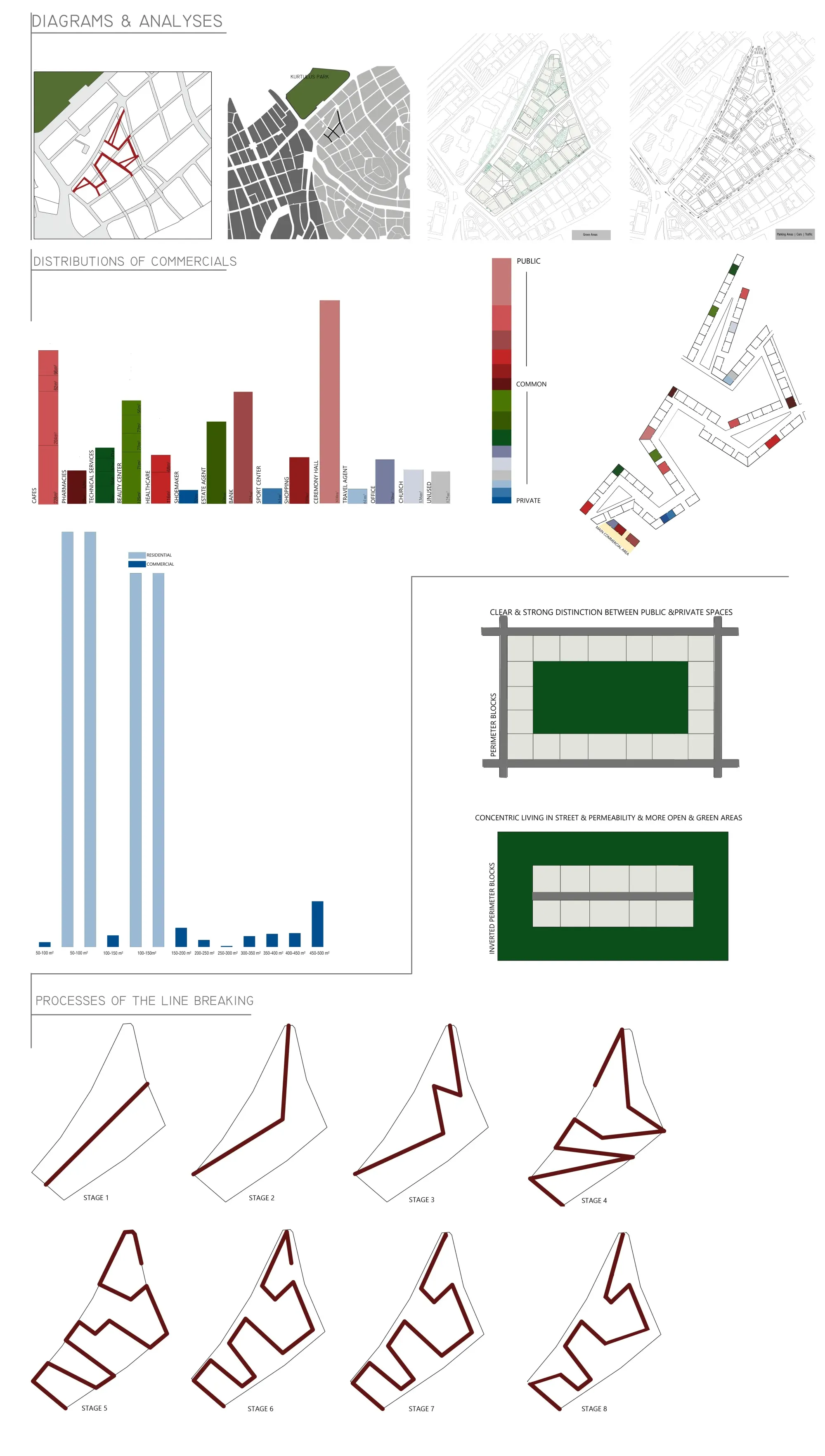
The design process was rooted in ethnographic research. By analyzing the axis from Kızılay to Cebeci, we evaluated the site through the lens of:
Socio-Economic Mapping: Interviews with 40+ residents to understand local demographics.
Urban Porosity: Identifying the disconnect between the site and Kurtuluş Park.
Infrastructure Challenges: Addressing the "introverted" nature of the residential blocks and the scarcity of pedestrian-friendly green zones.
02 / Concept: The Pedestrian Spine
To resolve the conflict between high-density traffic and residential life, we proposed a continuous pedestrian spine.
Inverted Perimeter Blocks: We moved away from traditional layouts to create "inverted" blocks that face inward toward protected green courtyards.
Distributed Commercials: Rather than isolating commercial activity, we distributed retail and social hubs throughout the site to enhance community interaction.
03 / Technical Resolution & Typology
The project balances high-density housing with varied spatial experiences:
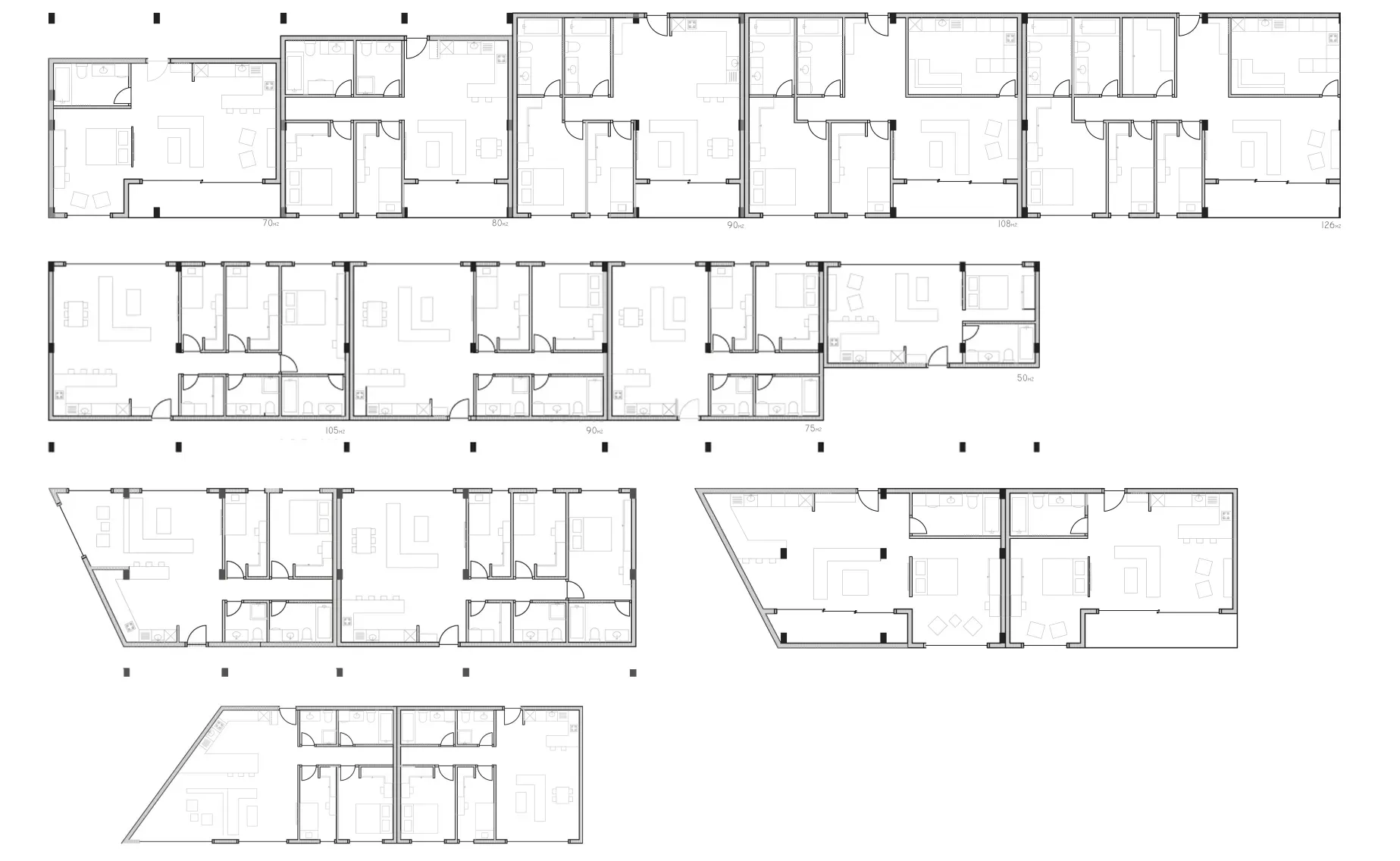
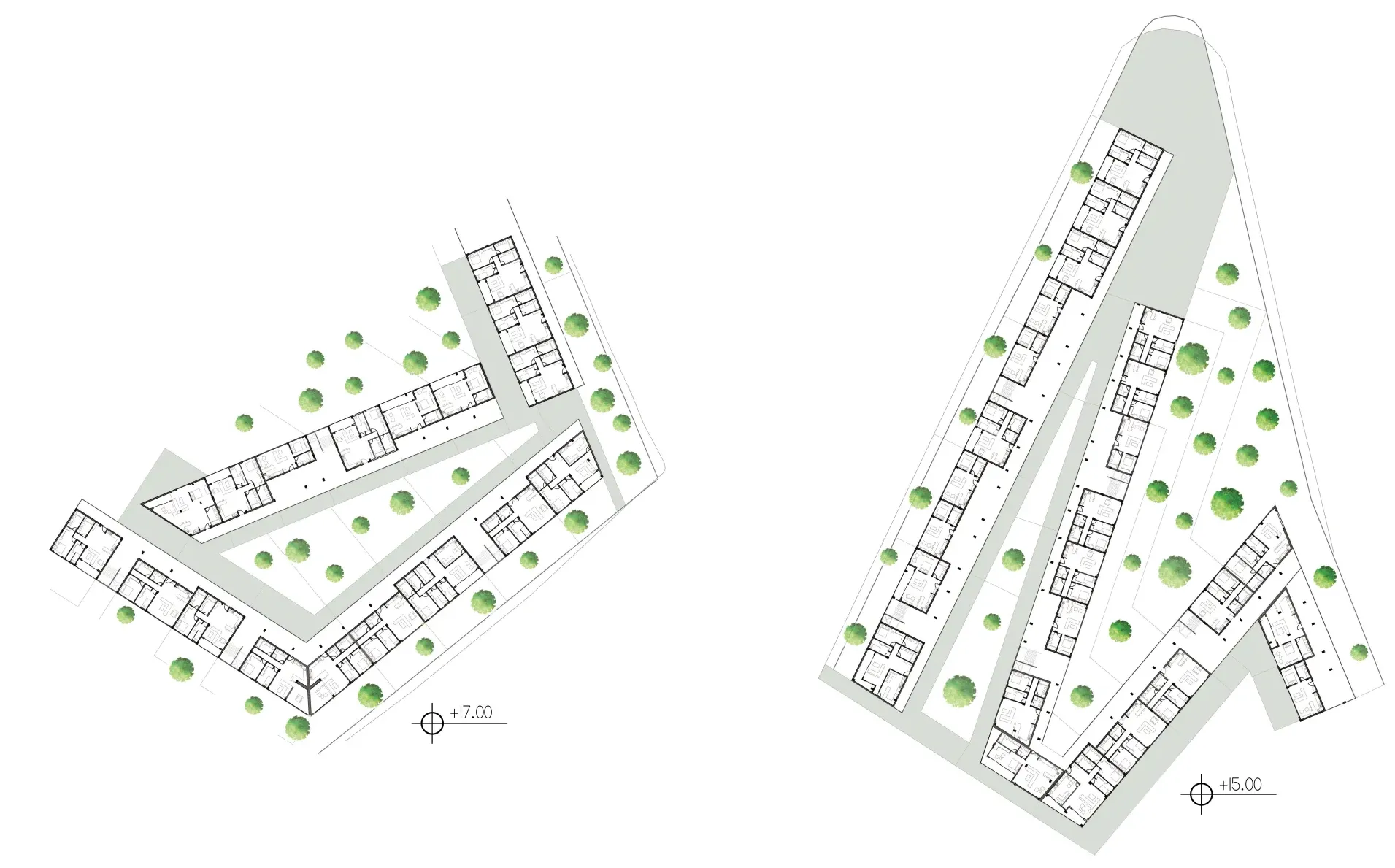
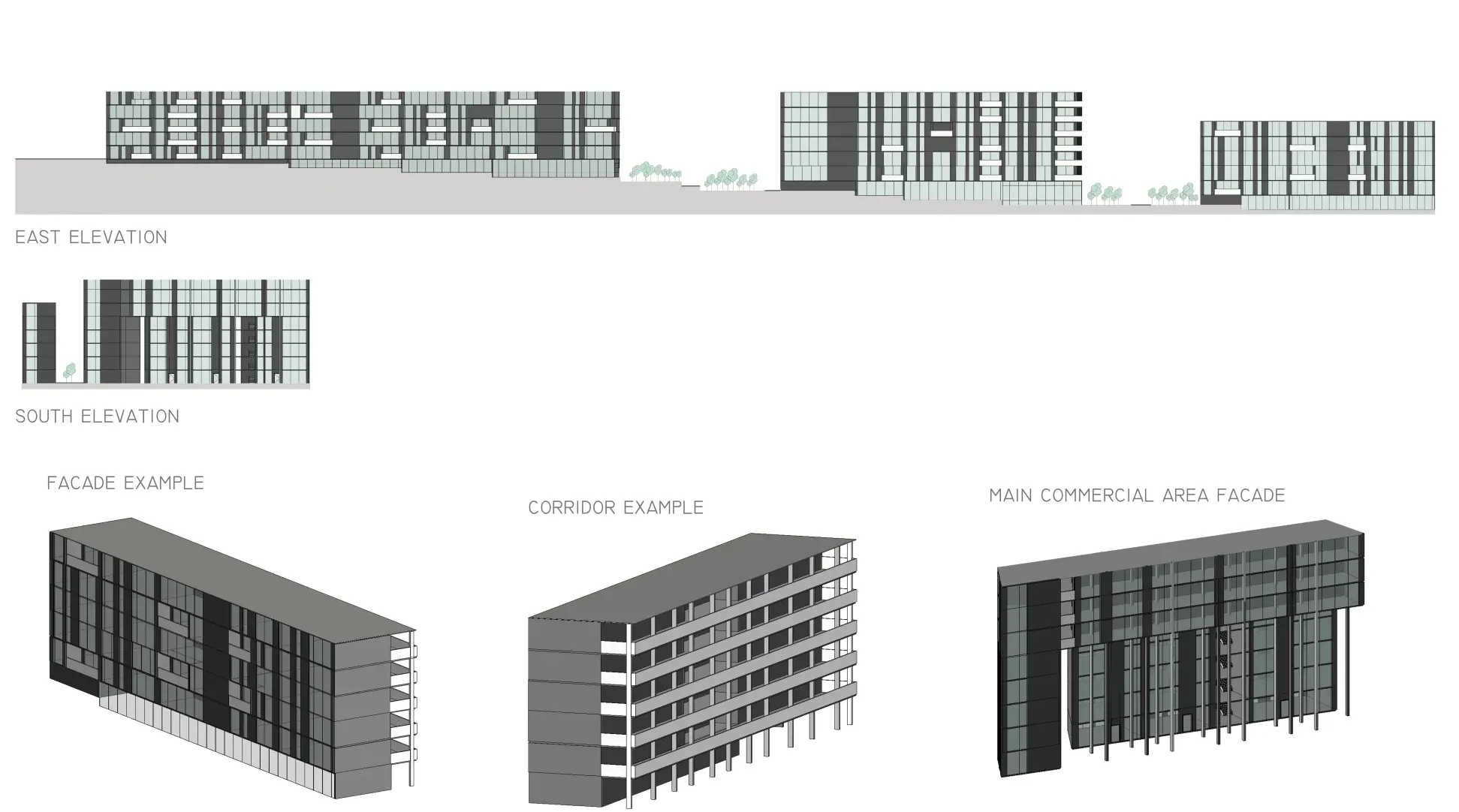
Unit Diversity: 530 blocks categorised into three main types: Standard (non-balcony), Balcony-integrated, and Trapezoidal.
The Corner Solution: Using trapezoidal geometry, we transformed difficult corner junctions into efficient circulation cores or unique housing units, ensuring no "dead zones" in the plan.
Topography: Building elevations were meticulously adjusted to the Kolej topography, using angle shifts to prevent claustrophobic pedestrian paths and create sun-lit gathering points.