Ludere
A modular design system for early childhood education and playgrounds that empowers children to mitigate ‘place attachment’ challenges by constructing their own play focused spaces.
Client: MA Creative Arts, Interior Design Project
Category: Product and Spatial Design

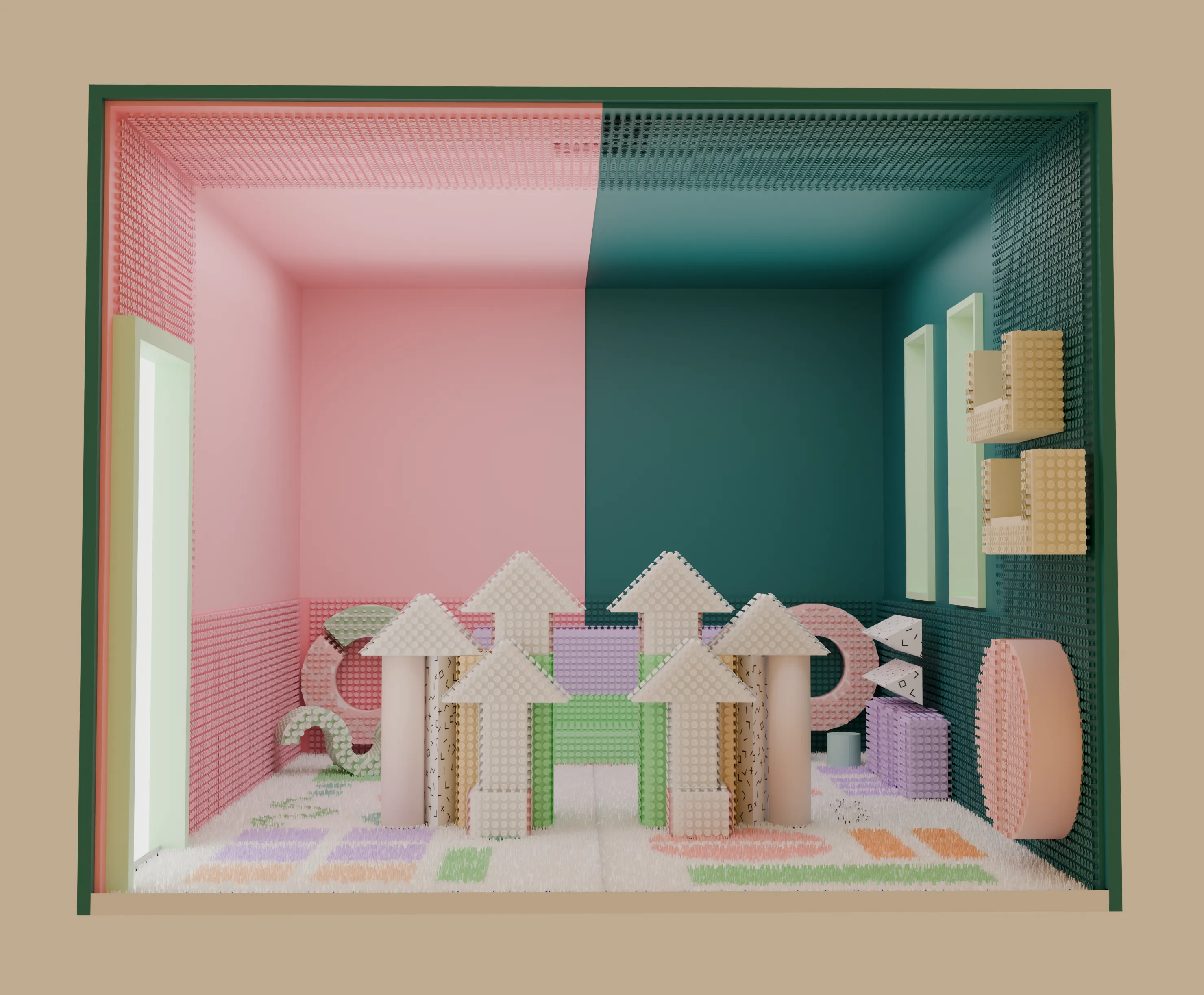
Research indicates that place attachment is a critical challenge for preschool-aged children who struggle to feel secure in environments outside the home. Ludere addresses this issue by inviting children aged 4–5 to construct their own interiors through play, using a modular system of interchangeable geometric units.
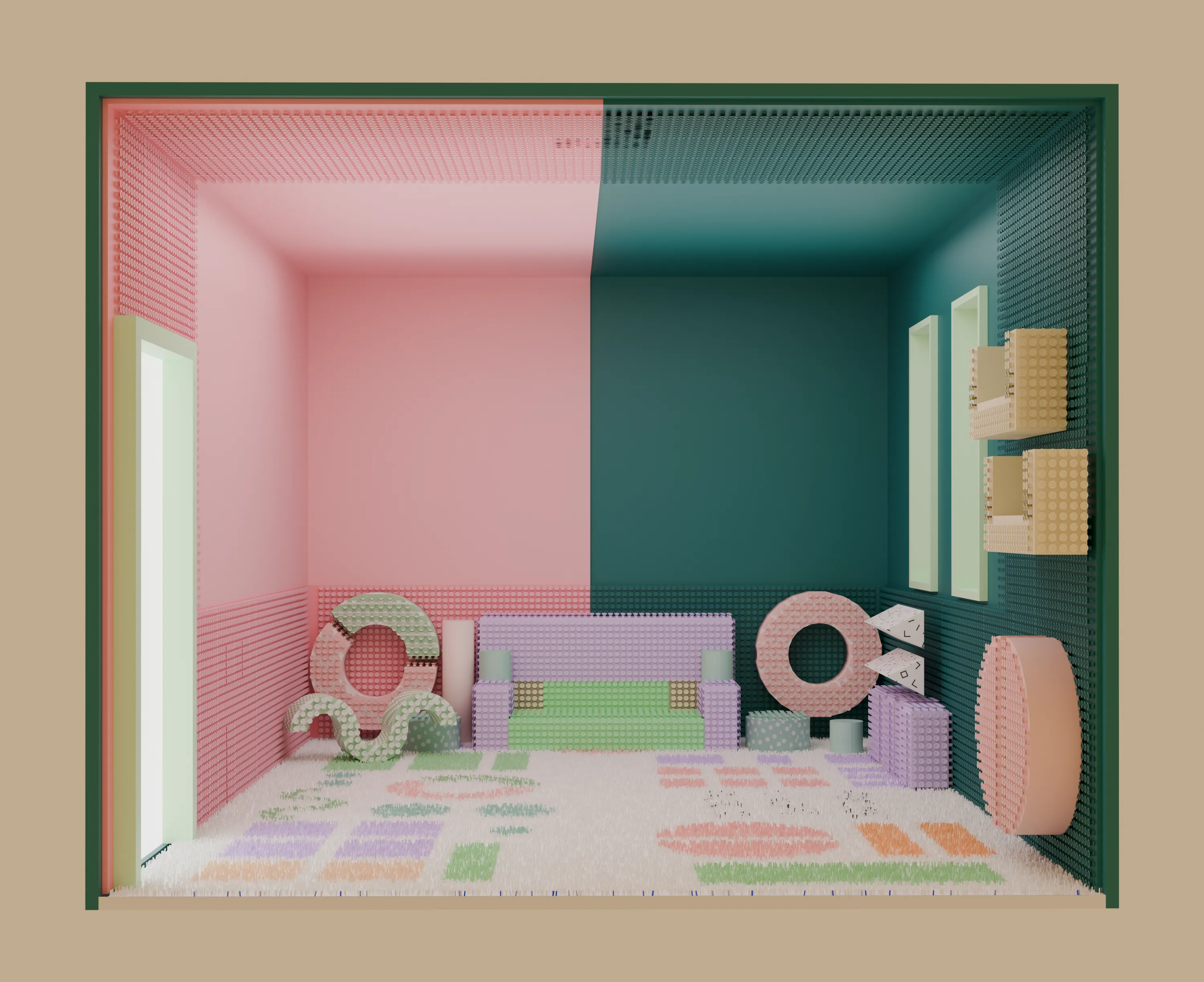
The Research: A Design-Historian Approach
The project began with an extensive archival study of playground typology and the social construction of childhood. By analysing how urban environments have historically dictated child behaviour, I developed a design language that prioritises agency, risk, and discovery.
The Design: Continuous Spatial Ribbons
The architectural intervention utilises continuous spatial ribbons to blur the lines between landscape and structure.
Fluidity: The design replaces static equipment with topographic shifts, inviting movement that is not prescribed but discovered.
Materiality: A curated palette of textures that provides sensory stimulation while maintaining a sleek, contemporary aesthetic suitable for high-density urban environments.
Accessibility: Just as with my professional branding work, Ludere was designed with a focus on universal design, ensuring that the "invitation to play" is legible and accessible to individuals of all physical abilities.